La Paz to Oruro
From soaring high above La Paz to diving into the unknown—rustic camps, endless sand, and sunsets painting an arid yet striking landscape.
La Paz - We are in the money!!
La Paz isn’t really a city you cross, it’s a city you wrestle, wrangle, and somehow survive.
First job of the day: haul our bikes across the madness and drop them off for a well-earned service. I swear South American cities are a full-contact sport. Taxis swerving, horns blaring, dogs darting, vendors popping up out of nowhere… somehow we emerged on the other side with our bikes handed over. Task one: complete.
Task two? The dreaded cop shop. And this is where I’ve gotta admit something I’ve been keeping quiet about, mostly because I’m still gutted, my camera got nicked. Broad daylight, opportunist grab, gone in a flash.
I’m still chewing that one over, trying not to let the bitterness stick. But if you want the full South American police experience, here it is. They plonked me in a corner, shoved Google Translate in front of me, and told me to write the damn police report myself. Cheers, mate. After scrawling out my sorry tale, I sat around for an hour or so while some bloke two-finger-typed it into the system. Eventually, I got handed my official piece of paper. Bloody marvellous.
Meanwhile, Maree was on a money, exchange mission. Ages ago we’d been told: don’t bother with ATMs, just bring US dollars and swap them. Turns out it’s true, you practically double your cash this way. By the time she reappeared, she had a grin and a wad of Bolivianos fat enough to choke a guinea pig. We were officially back in the $$$$.
Reunited, we wandered off to explore La Paz’s famous witches’ market. Fascinating doesn’t even cut it. Stalls stacked with herbs, powders, potions, and all manner of furry sacrifices. Llama foetuses. Guinea pigs. Dead things strung up like they’re waiting for a Halloween display.
Back at the hostel, Maree went full adrenaline junkie and booked herself onto the World’s Deadliest Road bike trip for tomorrow. Me? Nah. Hard pass. I’ll sit this one out. My body’s battling a raging cold, and the thought of hurling myself down a road famous for carnage while trailing a stream of snot doesn't really appeal.
Maree is buzzing with nerves, me buzzing with snot, and the night wound down quietly.
La Paz - Snot Factory!!
At dawn, Maree was up like a shot, dressed and grinning like a kid on Christmas morning. Today was her day to fling herself down the World’s Deadliest Road, a gnarly ribbon of gravel, mist and sheer drop-offs where buses once tumbled and legends were born. She practically skipped out the door, chasing adrenaline.
Me? I didn’t even lift my head. My body had staged a full-scale mutiny. After days of windburn, high altitude, and the emotional gut-punch of losing my camera, it was like my cells knew: we’re safe now—time to collapse. And collapse I did.
I spent the entire day welded to the bed in our little hostel room, a snotty, sniffly cocoon of fleece and tissues. The room blurred into a hazy grey of walls, muffled city noise and the faint scent of eucalyptus from the tea Maree left me. Every time I thought about getting up, nah. My limbs were concrete. My brain was porridge. Even the thought of a shower felt like a triathlon.
While Maree bombed down hairpins and braked through waterfalls, I curled deeper under my blanket, dozing between coughs and bouts of self-pity. It wasn’t glamorous, but it was exactly what my body demanded, total shutdown.
By evening, Maree burst back into the room flushed and electric, full of wild stories about drops and cliffs and riders skidding sideways on gravel. Me? Still horizontal, still a sniffly burrito
La Paz - Cable Cars
Who the hell goes to a foreign city and spends the day riding its public transport?
We do.
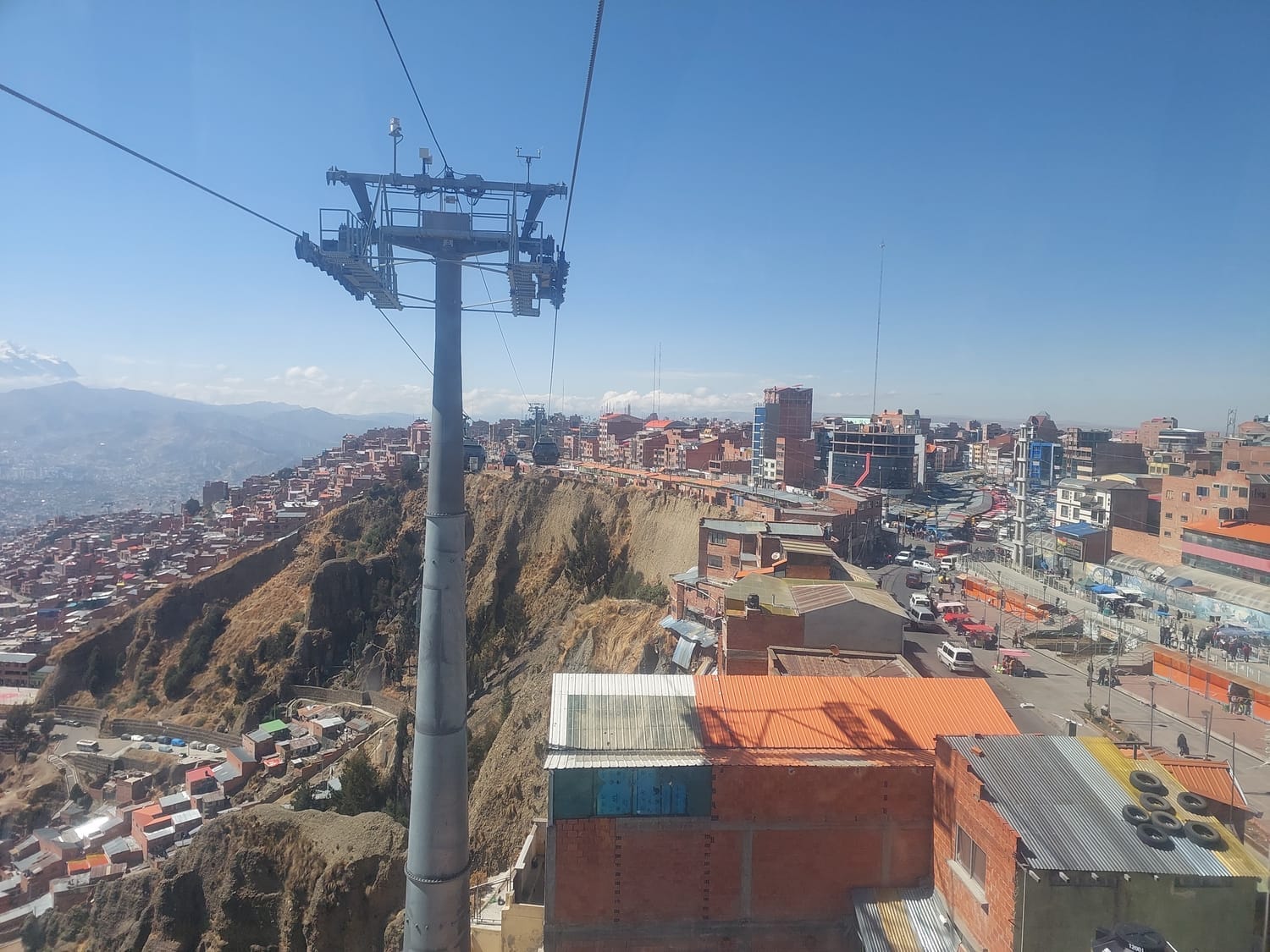
La Paz doesn’t muck around when it comes to moving people. Forget clogged-up streets and sweaty underground tubes, this city has a cable car network. Think London Underground, but dangling in the sky. Each line is a different colour, and today we were determined to ride the rainbow.
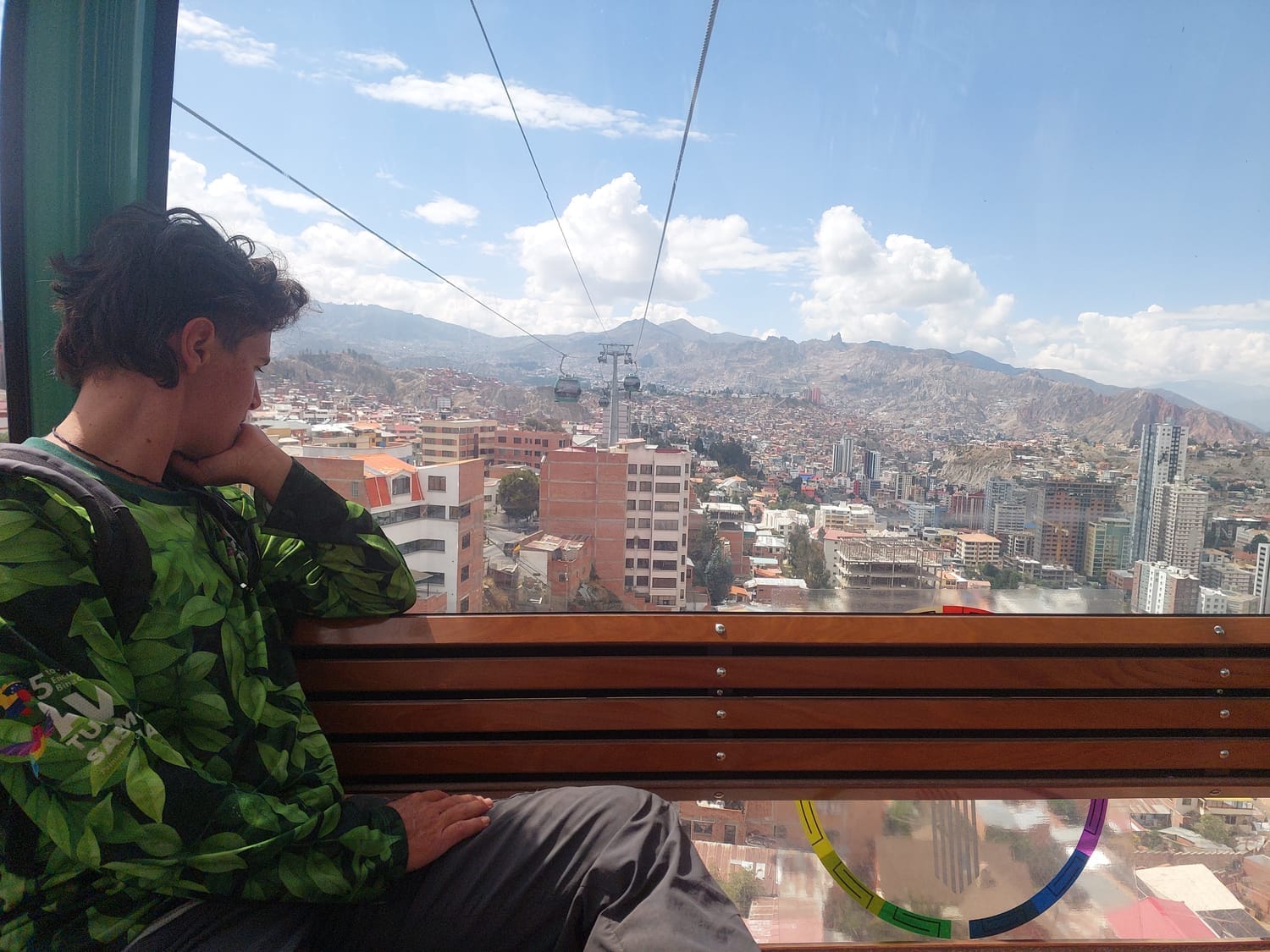
We kicked off with the green route—not part of the loop, but worth the detour. The gondola floated us silently up and over the city, and the views were ridiculous. La Paz is built inside a canyon, its walls carved from jagged rock, rust-red soil, and what looks like crumbling seabed. To see an entire city clinging to this fragile landscape, blows your mind. Houses stacked like Jenga pieces, neighbourhoods stitched into cliffsides, streets curling like veins.
Back on the loop, we looked down at more of the chaos. Cities get called “concrete jungles,” but La Paz? Nah. It’s more like a red Lego explosion. Everything, houses, shops, half-finished dreams—piled high out of red brick.
The line climbed us up to El Alto, the high flat above the canyon where life sprawls big and messy. This is market central, buzzing with chaos on the right days. Today wasn’t one of them, but the bones were there, broad streets aching for stalls, vendors, and chatter.
We had an errand to tick off: hunt down Shimano chains. Our bikes were in for service, but the shop hadn’t stocked them. At Shamano (not a typo, that’s the actual sign), the guy rummaged in dusty drawers and produced a single branded chain and one knock-off. Close enough. They’ll do.
Then it was back on the rainbow loop, gliding over streets, staring down at the patchwork life of La Paz. Honestly, the cable cars are the city’s best attraction, no crowds, no chaos, just floating peace with a side of jaw-dropping views.
Later, we collected our “averagely serviced” bikes and returned to the hostel for a token chill. But not for long, it was birthday night. My New Zealand birthday, to be precise. We headed to the Brew House, where Bolivian craft beer flowed and a fat, juicy steak landed on my plate. Perfect. I struggle to keep weight on with all this riding, so this slab of meat was pure gold for my legs.
One beer, two cocktails, a bit of birthday banter, and we wobbled our way back through the streets, lightweight as ever.
Tomorrow is my South American birthday. Tomorrow, we ride.

La Paz to the out skirts
This morning our bikes were starkers, naked. We’d stripped them bare for the service, and now they stood like two awkward mannequins waiting to be dressed. Pouches back on, bags strapped tight, and suddenly our steel steeds looked like themselves again.
But before we pedalled anywhere, breakfast was calling. The La Paz markets delivered: a big jugo to soothe my not-quite-100% body, followed by huevos and coffee strong enough to restart a dead battery. Maree fuelled up beside me, her appetite fully back in the game.
Reunited with our loaded bikes, we made a decision, ditch the traffic nightmare and escape La Paz the smart way: by cable car. Bikes rolled into gondolas, and suddenly we were dangling above the chaos, sailing toward freedom.
Of course, I had a mission first. The “new” chain I’d bought yesterday turned out to be too short. Typical. So I left Maree at the first station, book in hand, while I shot off across town via two cable car lines to track down a proper one. Easy, right? Ha. Spin me around three times in a foreign city and I’m more lost than a possum in daylight. Still, somehow, I made it to the shop, returned the dud chain, and even scored the perfect replacement at another store down the road. Win!
Now to retrace my steps. Cable car hop, cable car hop… and there she was, Maree’s head buried in a book, she looking up concerned when I strolled back.
“I thought you’d got lost?” she laughed.
“Nearly did,” I grinned. “But look—shiny new chain. Worth it.”
Right. Time to ride.
Bolivia 1—the main drag south. Normally that would spell horror, but two things made it surprisingly decent. First, the shoulder: a lane so wide it could fit a truck. It felt like we had our own private road. Second, the traffic: sure, there were buses and lorries, but not in manic South American amounts. Manageable.
The scenery stretched out around us. alpine plateaus rolling into hills, barren and stark. The kind of place you’d expect tumbleweed to bounce by. Only here, it wasn’t tumbleweed. It was stray plastic bags, tumbling and twisting across the empty flats.
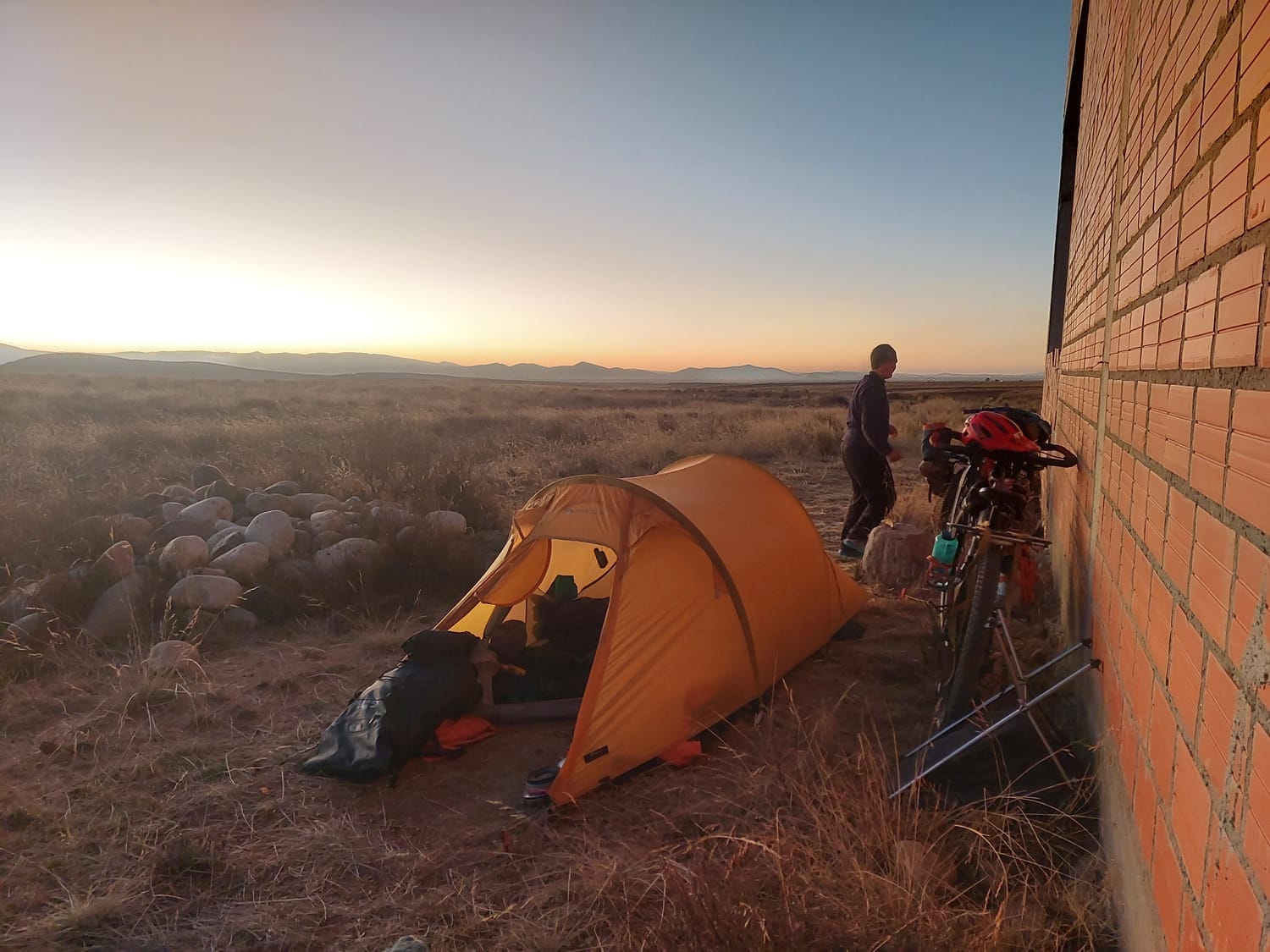
Since we hadn’t even started pedalling until after lunch, our one mission was simple: clear the city’s grip and find camp. Forty kilometres later, we spotted it, an abandoned brick allotment. Out of sight from the road, but drenched in sunshine and with views worth a million bucks. Perfect.
Dinner was a minimalist affair. We’d inhaled a massive chicken empanada on the ride out of town, so supper became “deconstructed fruit salad”: one orange, one banana, and half a mango each. Fine dining, bikepacker style.
The sun slid down, the plastic bags skittered by, and we leaned back, enjoying the moment.
La Paz out skirts to Patacamaya
I woke up feeling mint. Or so I thought. Pretty sure my body was having a laugh at my expense, because by the time I’d scoffed breakie and rolled my gear away I felt like I’d been hit by a bus. Aches, chills, the full cold-flu shebang.
Cycling today wasn’t about scenery or adventure, it was about survival. Every part of me screamed “nah mate, not today.” My body refused, so my head had to bark orders like a drill sergeant, just one more pedal stroke, then another, and another.
I know we were riding through a patch of the planet people would kill to see, but honestly? It blurred past in a haze. All I could do was cling to the rhythm of pedals turning.
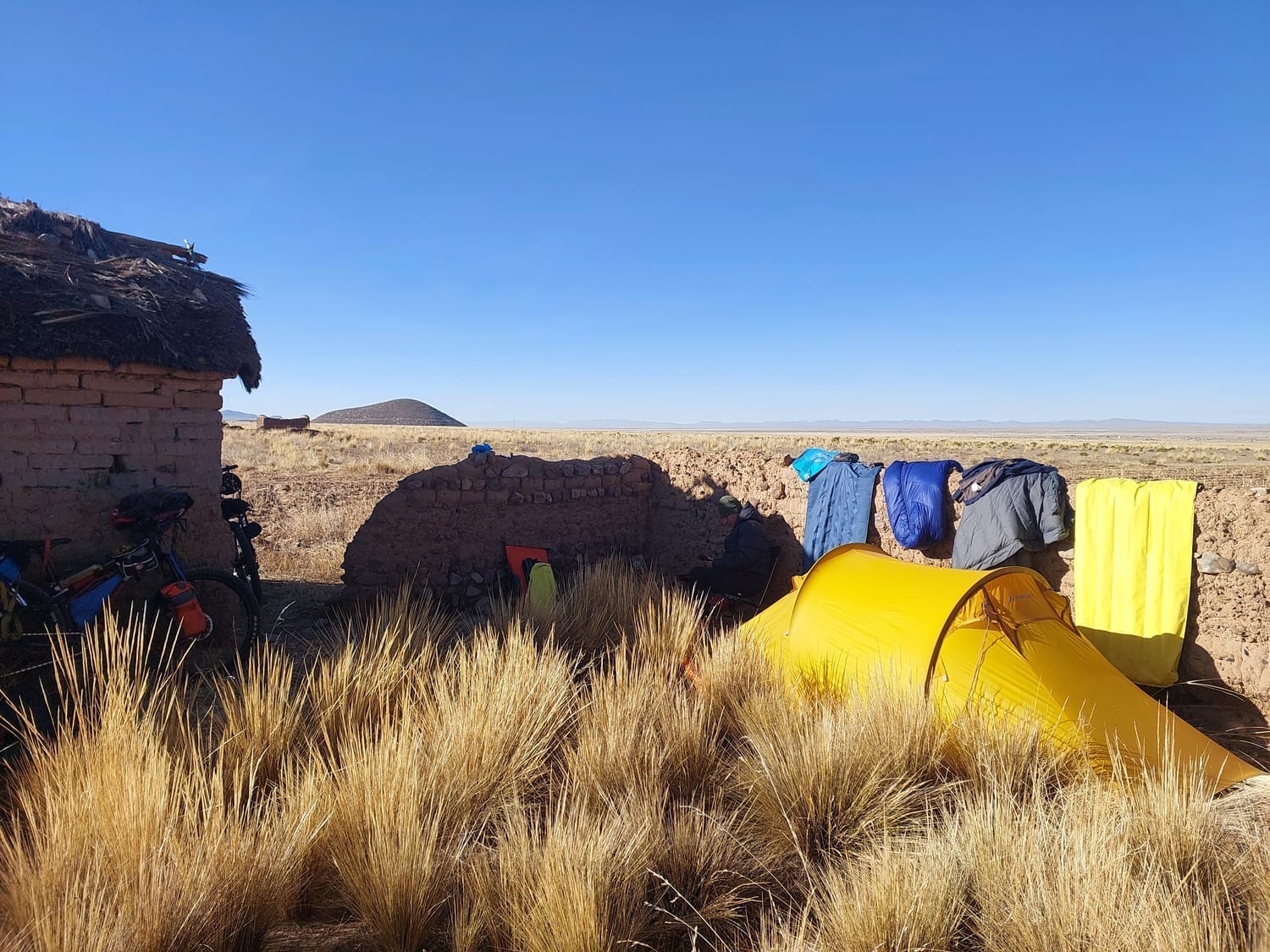
By early arvo I was done. Toast. No fuel left in the tank. Lucky for us, we stumbled on the bestest camp spot ever, an abandoned clay-brick shack with a little fenced animal yard, tucked just 100 metres off the road. Safe, quiet, perfect.
I slumped into my chair like a sack of spuds while Maree, bless her, pitched the tent, laid out my bed, and pretty much took over. I crawled in and passed out.
The rest of the day was a fog of sleep, lemon and honey brews, then more sleep. Maree was on nurse duty, and I couldn’t have asked for a better one.
Patacamaya to Oruro outskirts
I woke up feeling better, not cured, but definitely out of the “death warmed up” stage. Still, I flat-out refused to leave the tent until the sun hit us. Thirty minutes later than usual, but worth every ray.
We rolled off slow, aiming at a line of rolling hills in the distance. I played that familiar game of “guess the pass,” eyeing up where the road might cut through. Every time I thought I’d nailed it, the road cheekily veered a new direction. Play your games, road. I’ll still get over you.
First break was morning tea ice creams. Not sure what the doctor prescribes for lingering cold, but for me, creamy cold goodness does the trick. Kept the legs turning.
Back on the bikes, Maree pipes up:
“Hey babe, next town can we get a proper feed?”
Fair call. I’d been living off ice cream and fruit while under the weather, and Maree had just copied me. Her hunger had finally staged a rebellion.
The universe answered in the form of a roadside señora with a gaggle of locals tucking into plates. Maree took one look: sheep, rice, and spuds. That’ll do. Bellies filled, spirits topped up, we cruised off into a landscape of gentle ups and downs.
Finding camp though… that’s always the trick. Out here, the wide-open spaces betray you. From the road, you can see for miles—and we’ve got a strict rule: if we can see the road, then someone on the road can see us. And that makes us easy pickings.
Late arvo we struck gold,or so we thought. A schoolyard, complete with footy field and rotunda. We asked a bloke at the school if we could camp. He was having none of it. Grumpy bugger. “No, no, no.” Off we pedalled.
Then—pffffft! The unmistakable hiss. Maree’s twelfth puncture. In her flash new back tyre, too. A couple of plugs later and we were rolling again.
Soon after, the landscape shifted. Red brick country. Massive pits carved out of the earth, whole hillsides turned inside out for clay. Then the factory itself—long fences, smokestacks, piles of bricks curing in the sun. No chance of camping there.
We pushed on, legs doing their best impersonation of stubborn machines, until, there it was. A row of half-finished red-brick rooms, abandoned and waiting. Lonely little boxes in the dirt. We picked the best: concrete floor, solid roof, no tent required. Luxury.
Dinner demolished, hot chocky drained, eyes slammed shut. Legs sang that deep song of satisfaction that only comes after breaking 100km in a day.
Oruro to Desert camp
Gueez, I can see why people in this country live wrapped up in layer after layer of wool. Waking up in our brick shelter was like crawling out of a fridge. You could see our breath puffing little ghosts in the air. I stepped outside to relieve myself and boom, it was at least ten degrees warmer. Who knew the great outdoors was the better option?
We cruised into Oruro and were greeted by Mary herself. Not the real deal, but a giant statue encased in her very own dome. Picture a Mary snow globe, minus the snow, plonked in the middle of a roundabout.
It was Sunday, which meant markets. We wandered through stalls stacked with clothes and household bits, stocking up on veg while we could. This next stage was going to be remote, off the main drag, across the salt flats, so we needed food for at least six meals.
Luck was on our side. Back in La Paz I’d stumbled across a couple of dehydrated treasures: rice and veg, and a peanut soup that sounded half exotic, half suspicious. We thought we’d be stuck with the old fallback rice and tuna, until we hit gold in a tiny supermercado. Not just tins and basics, but odd little gems. GF pasta, oh my god, I nearly danced in the aisle. I haven’t seen gluten-free anything in this whole adventure. Straight into the bag. Then, dehydrated rice with carne and veg. Jackpot. With those, plus our market haul, we were set.
Fuelled up on pollo con papa (heaven for the belly) and, of course, ice cream—non-negotiable—we pedalled out of town.
And straight into another vortex. Suddenly we were riding past wetlands and lakes, the colours bleeding pink and yellow under the sun. Then the flamingos. Actual flamingos. Pods of them, strutting around in the shallows like the divas they are.
The road carried us further into wide open spaces: yellow tussock, mud flats, salt patches. The sun beat down hard, and the headwind joined in, drying us out like the alpacas we’d seen hanging stiff in La Paz’s witches market.
We’d made a pact: if we saw a decent camp spot, we’d take it. None of this “too early” nonsense. Out here, opportunities were rare.
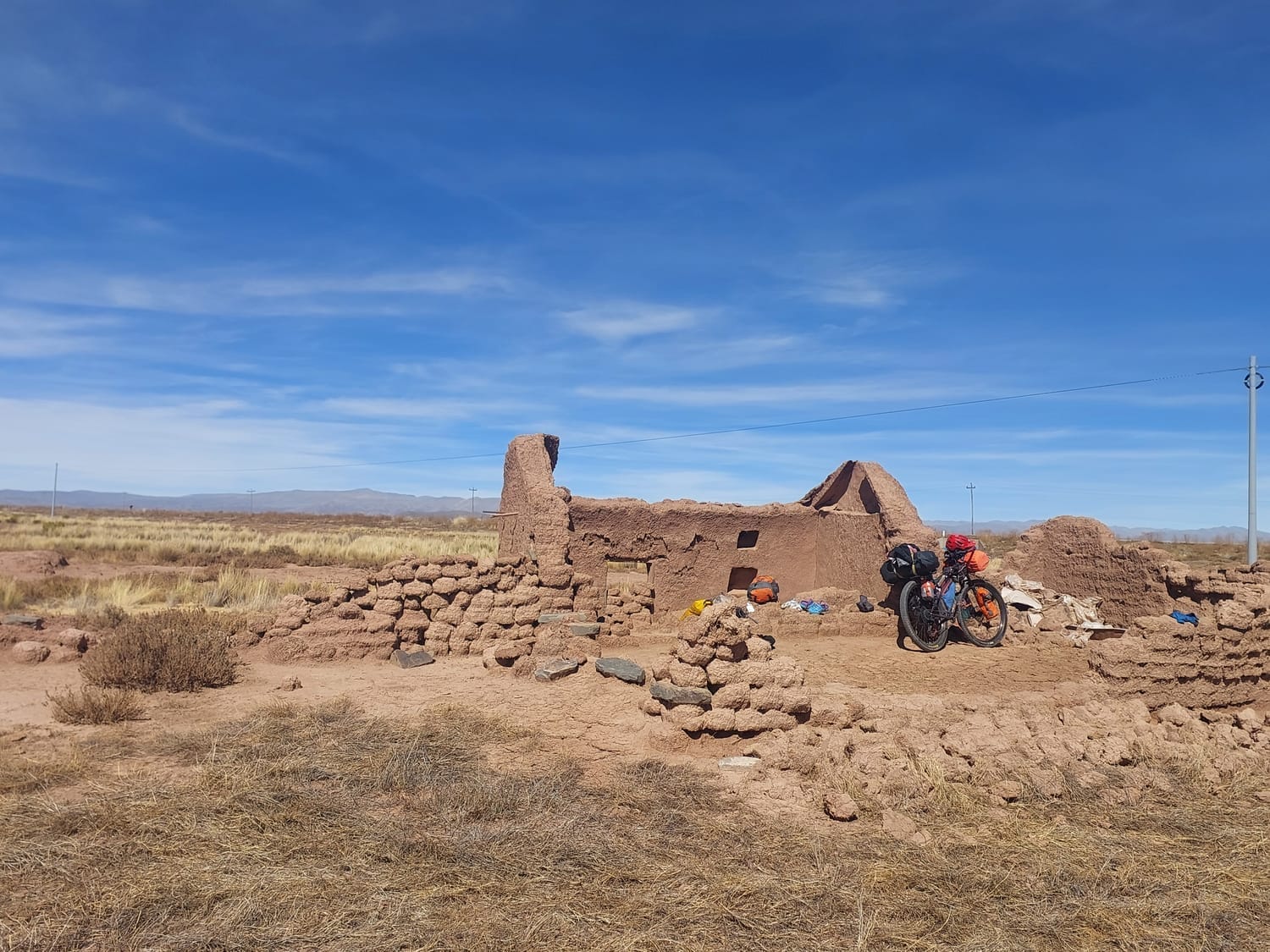
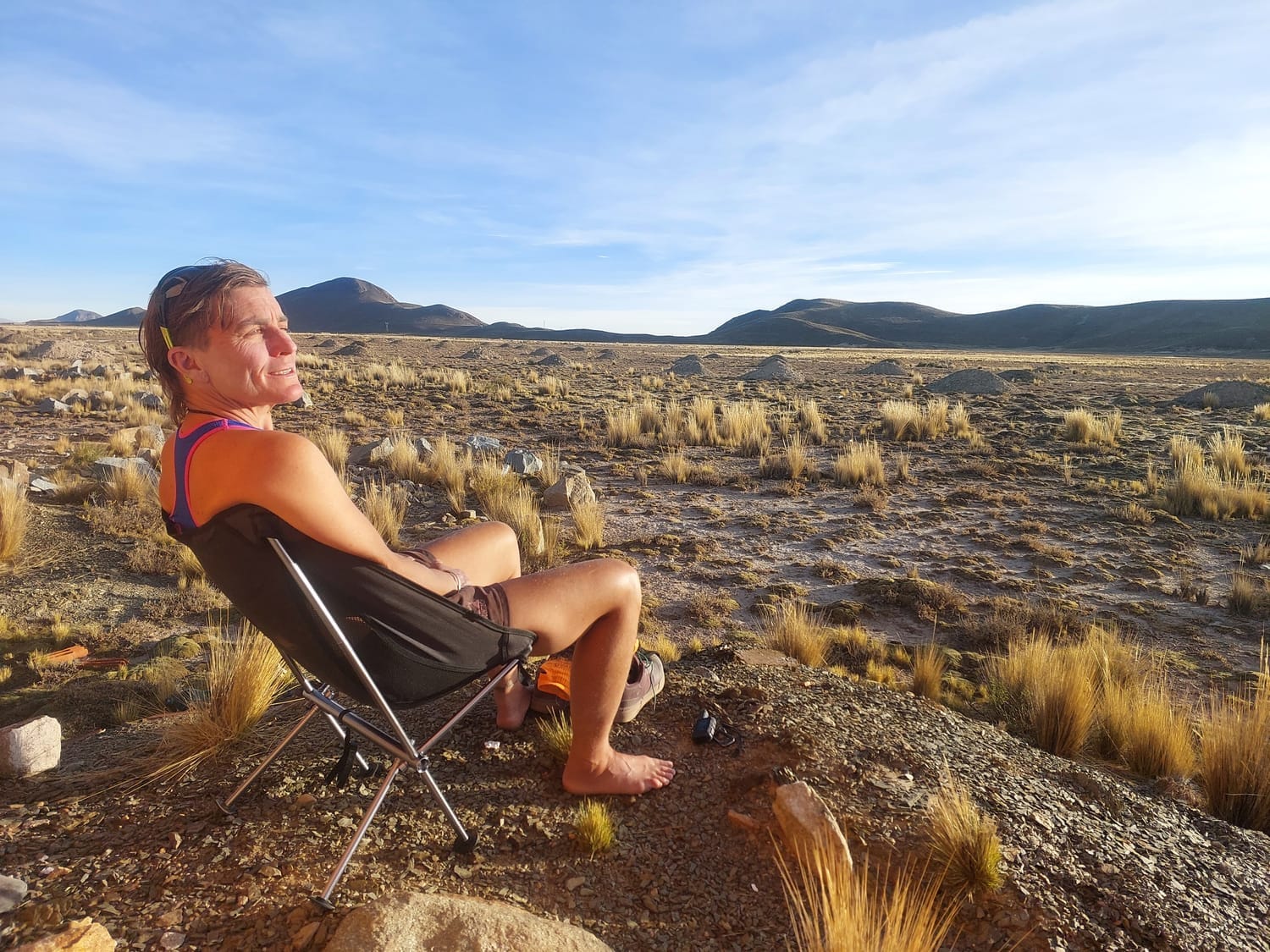
At 3pm, the ruins appeared, just a wee mud-brick shack, walls crumbled but enough to shield us from the road. Flat ground, tucked away. Perfect. Maree, being the absolute legend, rode back ten minutes to a roadside tienda for water and cervezas.
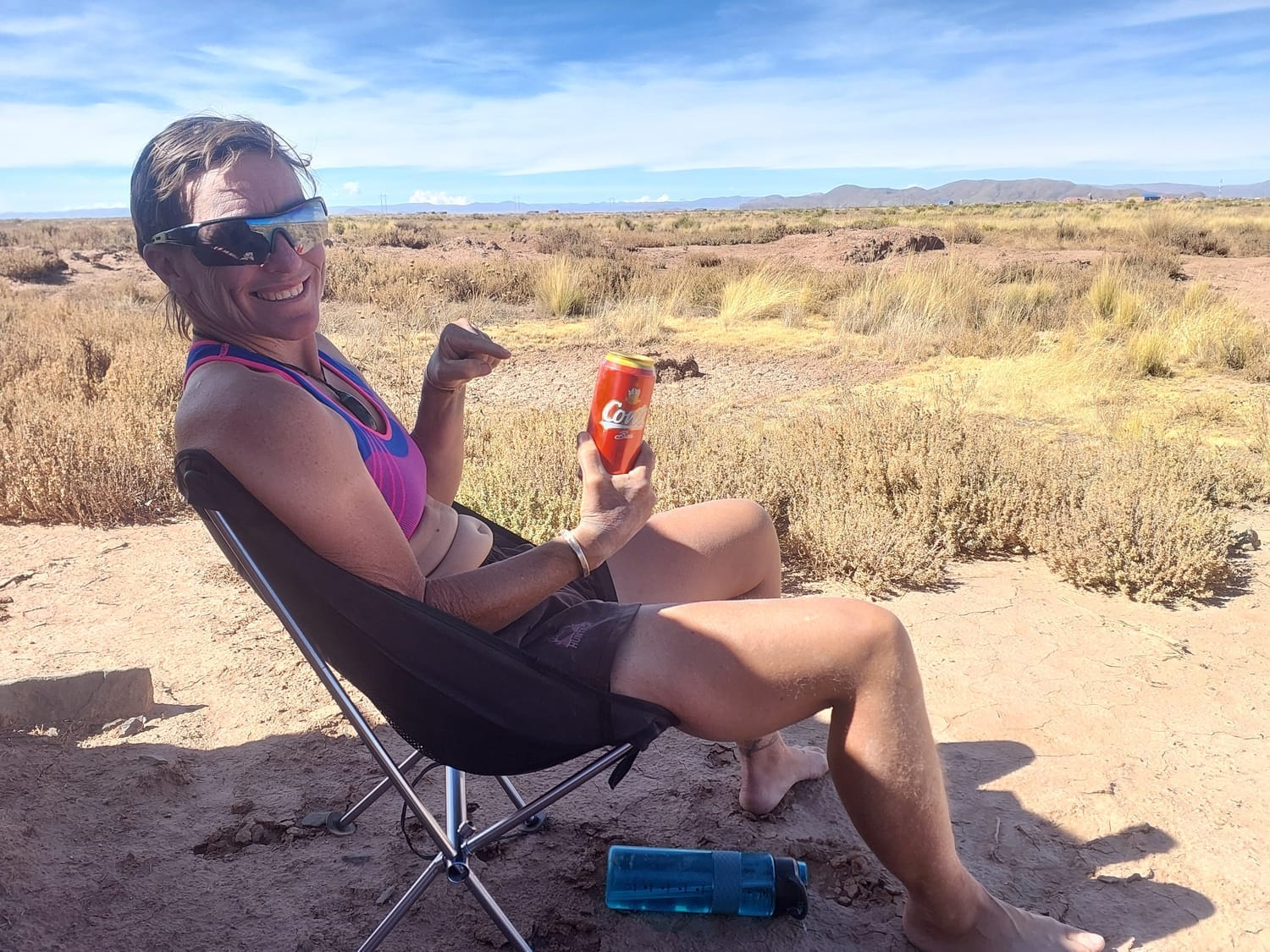
And that’s how we ended up sitting in the middle of nowhere, inside our ruins, sun on our faces, beers in hand, the world wide and empty around us. Surreal. Just us, the place, and the quiet hum of being exactly where we were meant to be